
People often use "certified" and "notarised" as if they mean the same thing. They don't — and asking for the wrong one can either cost you extra or get your document rejected. Here's the difference in plain English.
Certified translation
A certified translation is a full, accurate translation of your document accompanied by a signed certification statement — a declaration from the translation provider confirming the translation is true and complete. The certification is what gives the translation official standing. In Singapore, this is what most government agencies require for foreign-language documents, including MOM and LTA. For ICA PR, citizenship (CT) and LTVP applications, the translation must also be notarised (see below).
Notarised translation
A notarised translation is a certified translation with one extra layer: a Notary Public attests to the certification (typically witnessing and attesting the signing of the certification statement). The notary is not re-checking the translation itself — they are adding an independent, legally-recognised attestation. This is often required for:
- ICA PR, citizenship (CT) and LTVP applications
- Court proceedings and legal filings
- Embassy and visa applications
- Documents that will be used in another country
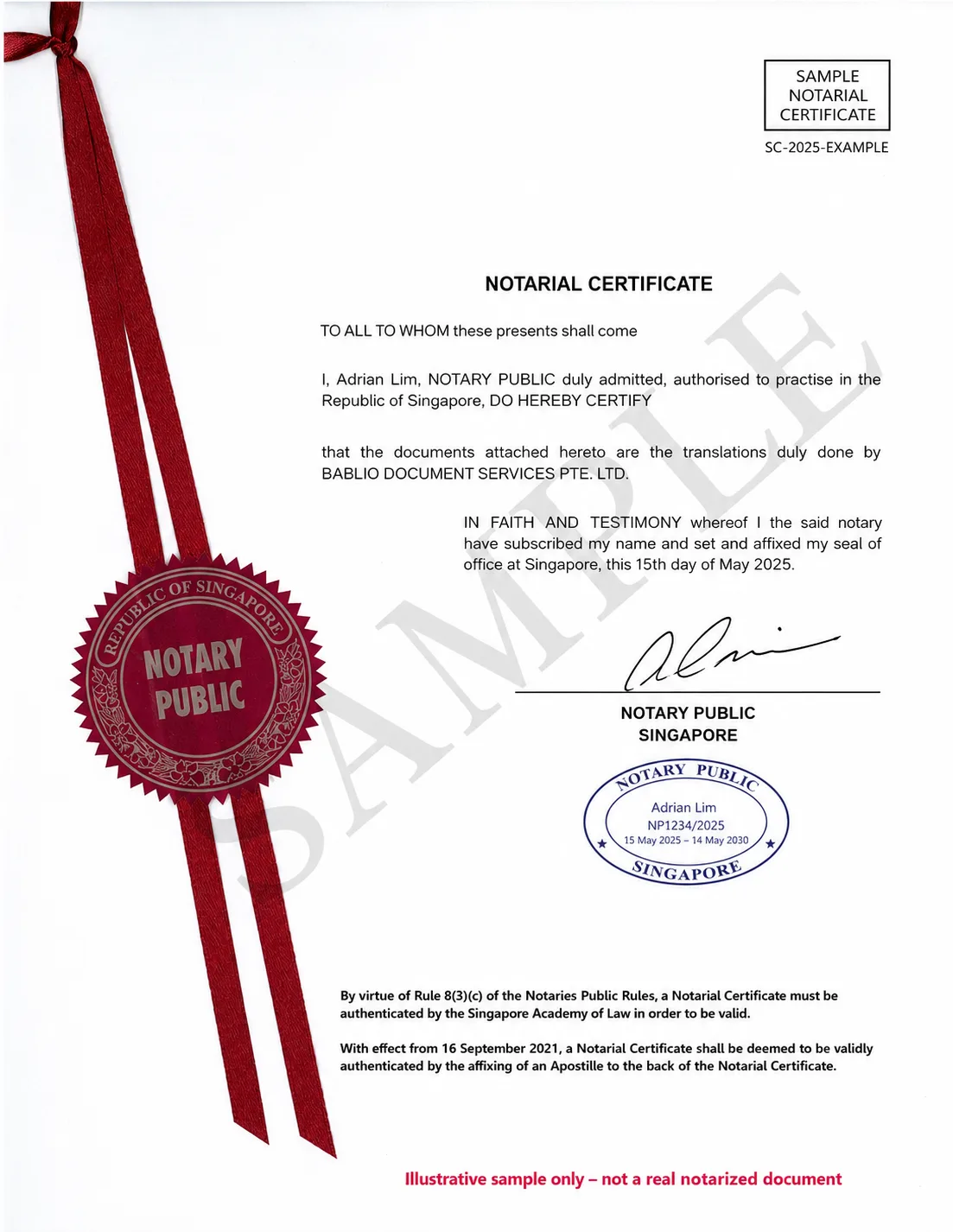
And then there's apostille (SAL legalisation)
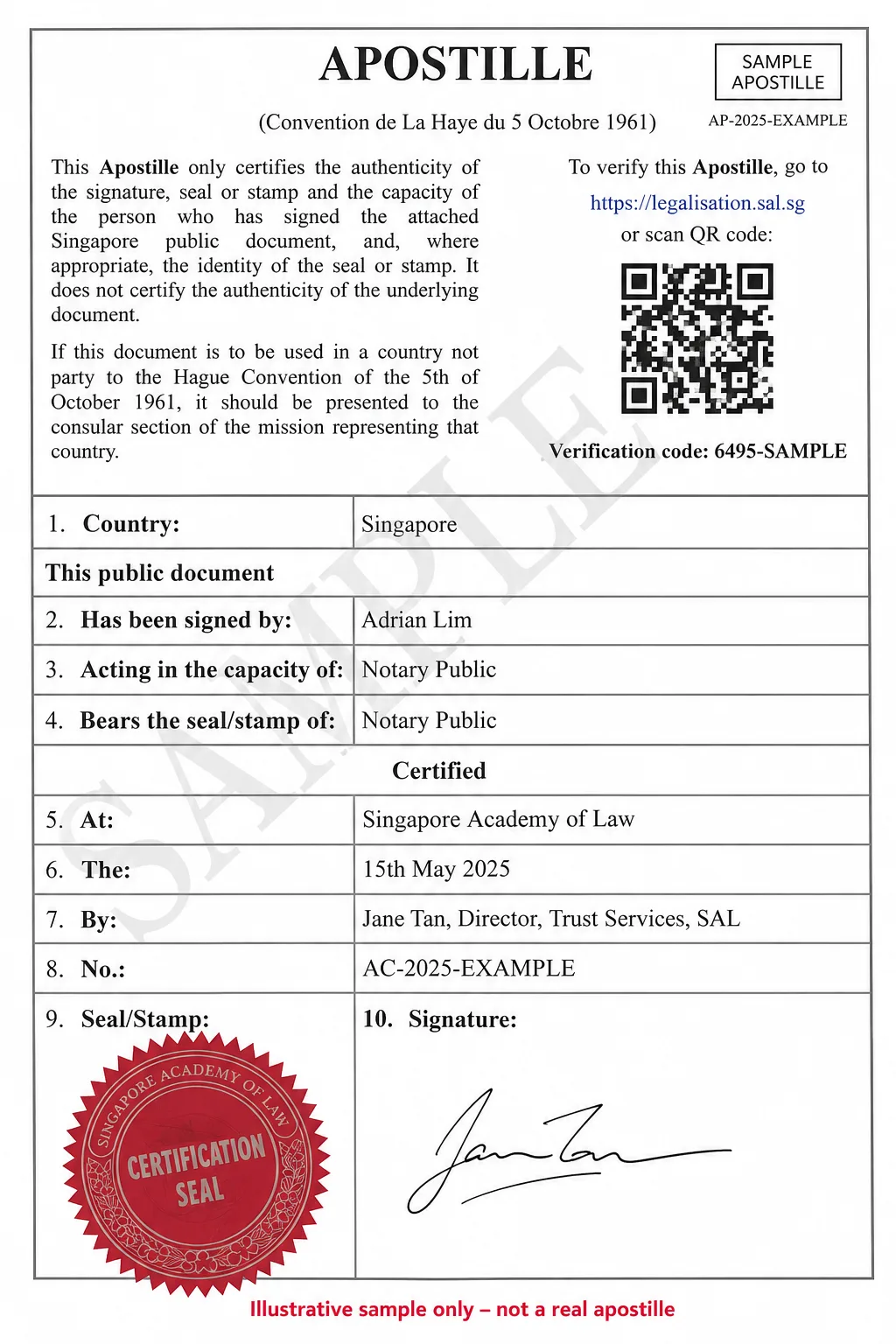
If your document is going to be used overseas, notarisation alone often isn't enough. Countries that are part of the Apostille Convention will ask for an apostille — a certificate that authenticates the document for international use. In Singapore, apostilles are issued by the Singapore Academy of Law (SAL), usually after the document has been notarised.
Which one do you need?
| Where you're submitting | Usually needs |
|---|---|
| ICA (PR, citizenship, LTVP) | Certified + notarised |
| MOM (work passes) | Certified |
| LTA (driving licence) | Certified |
| Courts & tribunals | Certified + notarised |
| Embassies / overseas use | Certified + notarised + apostille |
Not sure which applies to you? Our instant quote tool asks where you're submitting and shows you exactly what that authority needs.